
There is something special about watching the sun go beyond the horizon. A sunset is both an ending and a beginning. Photographing it feels like holding onto a moment that would otherwise disappear. Every time the sky turns into a canvas of orange, gold, and rose, I feel that familiar excitement build up inside me. Capturing sunsets has become more than just a habit; it’s a small ritual that always brings me peace and inspiration.
Over the years, I’ve taken countless sunset photographs, but the series of these 10-12 images is the one I wanted to showcase. The clouds drifted like soft brushstrokes across the sky. Standing behind the camera, watching the colors shift minute by minute, reminded me why I keep returning to this kind of photography. Every frame felt like a story unfolding.
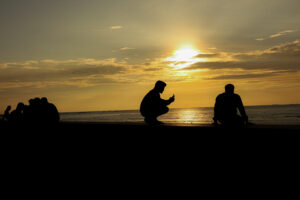

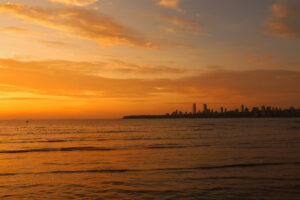
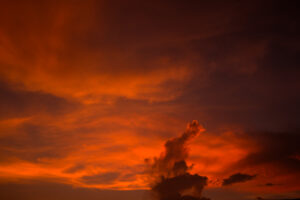
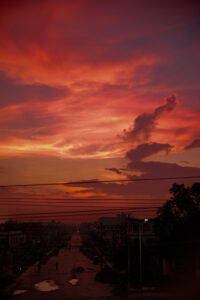
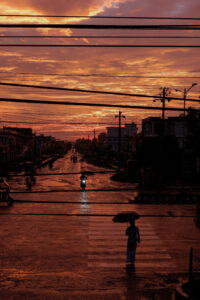

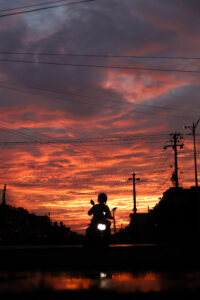
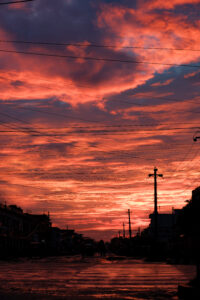

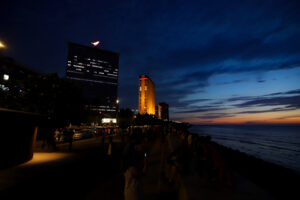
Technically, shooting sunsets requires a little planning. A camera with good dynamic range, a fast lens, and sometimes a tripod. A good camera helps balance the bright sky and the darker foreground. A fast lens captures more detail as the light fades, and a stable hand—or tripod—keeps everything sharp. Most of the time, I try to keep my ISO as low as possible, adjust the aperture based on the depth of field I want. Mostly, as i need a silhouette, I set the aperture to a little f-stop values like f/7- f/10, and experiment with shutter speed depending on whether I want the clouds to appear soft or crisp. Sunsets test your patience and timing, but they reward you with colors you can never fully predict.
I started my journey as a photographer with the Canon 6D Mark II, the first camera I ever bought after completing my graduate studies back in 2018. It’s more than a gear for me—it’s a reminder of where and when I began. Paired with a simple 50mm lens, it has taught me almost everything I know about light, composition, and patience. I stuck with the 50mm 1.8 not only because I couldn’t afford anything better than that (haha), but because it was all I needed for the kind of work I do. That lens forced me to move, observe, and understand the scene better. Not that I do not use other lenses, I use as per my need when doing some professional work or some event work.
I’ve been shooting with the Fujifilm XT100, as well —one of Fuji’s most beginner-friendly cameras. Even after being the most beginner and cheap (as per price range), it’s color science is something I immediately fell in love with. The tones are rich, the highlights roll off beautifully, and even in low light, the camera performs surprisingly well. I only have the basic kit lens for it, but it has never stopped me from enjoying the process. In fact, switching between my Canon and Fuji gives me fresh perspectives each time I shoot a sunset.
In the end, sunset photography is a mix of emotion, timing, and simple curiosity. Whether I’m using my trusty Canon with the ever-faithful 50mm or my lightweight Fuji with its dreamy colors, the experience remains the same—calming, inspiring, and deeply personal. Every sunset reminds me that beauty exists in fleeting moments, and capturing them has become one of the most fulfilling parts of my journey as a photographer.
P.S.: Please do not use any of the pictures without permission. Thank you for understanding.